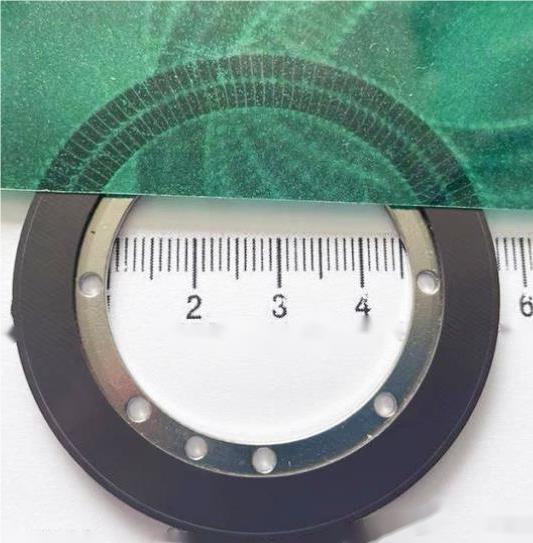
Thermal conductive silicone

1.1 Core Mechanism of Silicone Thermal Conductivity

Thermal conductive rubber is a functional material created by filling a rubber matrix with thermally conductive fillers, balancing thermal conductivity, insulation, and elasticity:

PropertyAdvantage
Thermal Path ConstructionFillers (Al₂O₃/BN/graphene) form conductive networks for directional heat dissipation
Interface Stress BufferElastic modulus (0.5~5MPa) fills device gaps, reducing contact thermal resistance by >30%
Electrical Insulation SafetyVolume resistivity >10¹² Ω·cm, breakdown voltage >10 kV/mm
Environmental ResistanceTemperature range: -60°C~250°C, UV/ozone/chemical corrosion resistance

Silicone rubber itself is a poor thermal conductor (inherent conductivity: 0.1-0.3 W/m·K). Its thermal performance entirely depends on filler system design:

  • Phonon-Dominated Heat Transfer:
    Heat propagates through non-metallic materials as lattice vibration waves (phonons). Silicone’s disordered molecular chains scatter phonons, while highly conductive fillers (e.g., AlN, diamond) establish efficient phonon pathways via regular crystal structures.
  • Filler Network Construction:
    When filler volume fraction exceeds 70%, particles form interconnected 3D thermal networks, enabling rapid heat transfer along “filler chains”.
  • Interfacial Thermal Resistance Optimization:
    Silane coupling agents modify filler surfaces, enhancing chemical bonding with silicone and reducing phonon scattering losses at interfaces (thermal resistance reduced by up to 50%).

Silicone remains the optimal choice due to its molecular chain flexibility, wide temperature tolerance (-50~200°C), and high filler tolerance (>90% filler content while maintaining elasticity). Other rubbers serve only as limited-scenario alternatives with significantly higher costs.

1.2 Feasibility of Thermal Conductivity in Other Rubbers

Thermal conductivity isn’t exclusive to silicone, but other rubbers face three major challenges:

Rubber TypeThermal PotentialTechnical Challenges & Solutions
Fluorocarbon (FKM)3-5 W/m·KHigh-temperature resistance (>200°C), but brittleness at high filler loads → Add CNTs + silica microspheres for toughness
EPDM2-4 W/m·KLow polarity causes poor filler dispersion → Use plasma-activated Al₂O₃ to enhance interfacial bonding
Nitrile (NBR)≤2.5 W/m·KLow heat resistance (<120°C) → Limits use of high-conductivity fillers (e.g., graphene)
Polyurethane (PU)≤3 W/m·K (theoretical: 5W)Microphase separation hinders heat transfer → Requires block copolymers for directional filler distribution

1.3 Application Examples of Non-Silicone Thermal Rubbers

ProductMatrixConductivityApplication Scenario
Thermal FKM SealsFKM3.2 W/m·KSemiconductor reactor sealing
EPDM Thermal Gap PadsEPDM2.5 W/m·KEV battery module interlayer cooling
Silicone-Free PU PadsPU1.8 W/m·KMedical MRI equipment (avoid silicone contamination)

2. Filler System Optimization

Conductivity (W/m·K)Core Filler CompositionThermal Mechanism
1-3Al₂O₃ (70%) + silica powderBasic particle contact conduction
5-8BN + spherical Al₂O₃ (85%)“Thermal chain” network construction
10-15Diamond powder + modified graphene (90%)Phonon transmission + lattice vibration synergy

3. Interfacial Thermal Resistance Control

  • Surface Wetting Technology:
    Micro-adhesive surface layer (0.01-0.03N/cm²) fills air gaps, reducing thermal resistance by 40%.
  • Adaptive Deformation:
    Ultra-soft pads (Shore00 10-30) achieve >95% contact area under 0.05MPa pressure.

4. Structural Innovation Design

TypeTechnical SolutionThermal Gain
Composite PadGlass fiber mesh embedding (0.2mm)+15% conductivity
EMI-Absorbing PadFerrite/CNT hybrid fillerDual thermal/EMI function
Adhesive-Backed PadAcrylic PSA layer (50μm)Assembly thermal resistance ↓30%

Thermal Silicone Pad Product Series

Product SeriesConductivity (W/m·K)Key Features/DifferentiatorsTarget Applications
Standard Pads1.0/2.0/3.0Cost-effective, basic coolingConsumer electronics, LED
High-Performance Pads5.0/6.0/8.0Mid-high conductivity, balanced performance5G base stations, PSUs
Ultra-High Perf. Pads10.0/12.0/15.0Extreme thermal conductivityServer CPUs, high-power ICs
Ultra-Low VOCs PadsD3-D20 (≤100ppm)Ultra-low outgassing, aerospace/medical gradeAerospace, medical devices
Silicone-Free Pads2.0/3.0/5.0No silicone migration, protects circuitsOptical sensors, IC packaging
EMI-Absorbing Pads3.0/5.0Thermal + electromagnetic absorptionRF modules, microwave devices
Low-Density Pads1.2/2.0/3.0Density ≤1.0g/cm³, lightweightWearables, drones
Ultra-Soft Pads1.0-3.0 (Shore00 10-30)Ultra-low hardness, fills gaps down to 0.1mmFlexible circuits, micro-electronics
Composite PadsCustom (2.0-8.0)Fiberglass/PI reinforced/adhesive-backedIndustrial, high-vibration

Core Product Features

  • High Conductivity & Low Thermal Resistance:
    Continuous thermal paths via ceramic/metal fillers (AlN, ZnO, diamond); optimized silicone resin reduces phonon scattering.
  • Electrical Insulation & High Voltage Resistance:
    Insulated filler surfaces (e.g., Al₂O₃-coated); dense structure blocks current (withstands >10kV/mm).
  • Environmental Stability:
    Platinum-catalyzed anti-yellowing; UL94 V-0 flame resistance (Al(OH)₃/P-based additives); stable from -50°C to 200°C.
  • Low Oil Bleed (<0.1%):
    Ultra-high crosslinking + low-MW inhibitors.
  • Reusability:
    3D network memory recovery.

← Back

thanks for your inquiry

Suzhou Obtiv Technology Co.,LTD

No.211 Zhujiang Road, Suzhou City, China