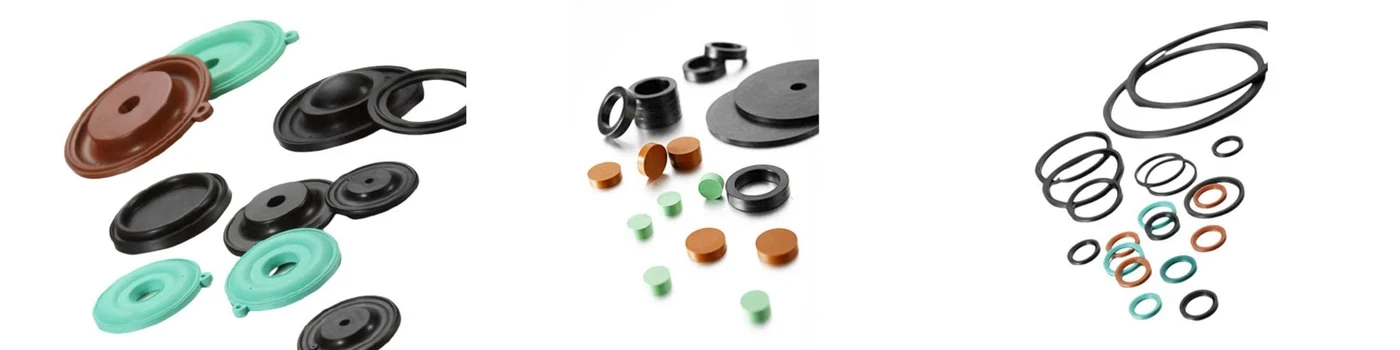

The performance of rubber materials varies due to differences in their molecular structures, such as the presence of specific functional groups (e.g., nitrile in NBR or fluorine in FKM), which influence properties like chemical resistance and thermal stability.
Compare Rubber Families by the Intended Service
Polymer names are a starting point for compound selection. Fluid composition, temperature, pressure, geometry and test conditions determine suitability; a generic numerical score cannot establish compatibility.
| Rubber family | Selection context | Confirm before specifying |
|---|---|---|
| NBR / HNBR | Oil-contact and industrial sealing candidates | Fluid aging, temperature, compression set and grade-specific properties |
| FKM / FFKM | Chemical and elevated-temperature sealing candidates | Exact fluid, concentration, cold behavior and compound documentation |
| EPDM | Water, selected glycol mixtures and weather-exposed components | Coolant additives, fluid compatibility and application aging tests |
| Silicone / FVMQ | Flexible seals with temperature and fluid requirements | Mechanical loading, permeability, fluid exposure and selected grade |
| AEM / ACM | Automotive oil and thermal exposure candidates | Specific fluid, temperature cycles and component qualification |
Prepare a Rubber Compound Selection Request
Send the drawing, fluid specification, minimum and maximum temperatures, pressure, movement, required quantity and applicable customer tests. Discuss compound selection with OBT before treating a general property table as a component rating.


