


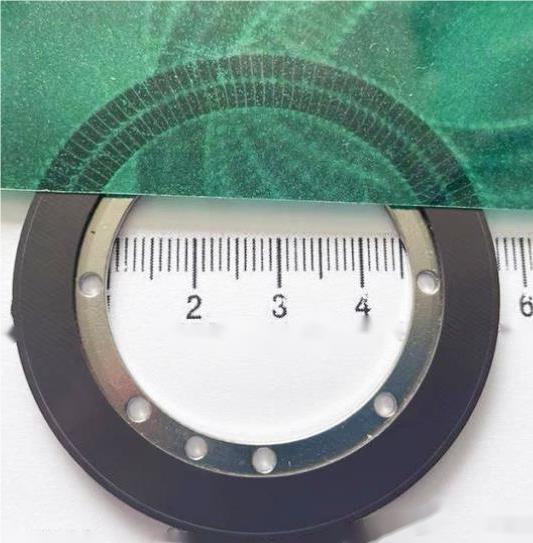
PTFE (polytetrafluoroethylene) is characterized by excellent chemical resistance, a wide temperature tolerance (-200°C to +260°C), low friction, and non-stick behavior, making it ideal for corrosive, high-purity, or dynamic applications.

Combining rubber (e.g., EPDM or FKM) with PTFE is necessary in the condition requiring both elastic sealing performance and excellent chemical/wear resistance, such as dynamic seals exposed to aggressive fluids or movement.

Hybrid seals (rubber-PTFE bonded) are widely used in pumps, valves, and hydraulic systems.
Table for Property of PTFE Material
| Property | Performance |
|---|---|
| Chemical Resistance | Excellent, resistant to almost all chemicals |
| Temperature Stability | -200°C to +260°C (-328°F to +500°F) |
| Coefficient of Friction | Very low |
| Reactivity | Chemically inert |
| Electrical Insulation | Excellent dielectric properties |
| Water Repellency | Hydrophobic, low water absorption |
| Flexibility | High, across wide temperature range |
| Toxicity | Non-toxic and biocompatible |
| Hardness | Typically 50-60 Shore D |
| Compression Set | Very low, typically less than 10% |
Detailed Performance Characteristics
- Chemical Resistance: PTFE is highly resistant to almost all chemicals, making it an excellent choice for applications involving corrosive substances. It is impervious to acids, bases, and solvents.
- Temperature Stability: PTFE can operate effectively over a broad temperature range, from -200°C to +260°C (-328°F to +500°F). This makes it suitable for both cryogenic and high-temperature applications.
- Low Friction: PTFE has one of the lowest coefficients of friction of any solid, which provides excellent non-stick properties and reduces wear in moving parts.
- Non-Reactivity: PTFE is chemically inert, which means it does not react with other substances, making it ideal for use in reactive environments.
- Electrical Insulation: PTFE has excellent dielectric properties, making it a superb insulator for electrical applications.
- Water Repellency: PTFE is hydrophobic, meaning it repels water and has low water absorption.
- High Flexibility: Despite its robustness, PTFE remains flexible across a wide temperature range, providing good sealing properties.
- Non-Toxic: PTFE is non-toxic and biocompatible, making it safe for food, medical, and pharmaceutical applications.
- Hardness: PTFE typically has a hardness of 50-60 Shore D. This hardness range provides a balance between flexibility and strength, suitable for various sealing applications.
- Compression Set: PTFE exhibits a very low compression set, typically less than 10%. This means it retains its shape and sealing properties well under compression over time, making it reliable for long-term sealing applications.
Applications of PTFE Material
- Chemical Processing: Due to its chemical resistance, PTFE is widely used in gaskets, seals, and linings for pipes, tanks, and reactors in the chemical industry.
- Food and Beverage Industry: PTFE’s non-stick properties and safety make it suitable for food processing equipment, non-stick cookware, and conveyor belts.
- Medical Devices: PTFE is used in medical applications such as catheters, surgical instruments, and implants due to its biocompatibility and non-reactivity.
- Aerospace and Defense: PTFE is utilized in aircraft and spacecraft components for its thermal stability, chemical resistance, and low friction properties.
- Automotive Industry: PTFE is used in seals, bearings, and bushings in automotive applications, where its low friction and high-temperature resistance are beneficial.
- Electronics: PTFE’s excellent electrical insulation properties make it ideal for wire coatings, cable insulations, and PCB (printed circuit board) substrates.
- Pharmaceutical Industry: PTFE is used in pharmaceutical manufacturing for gaskets, seals, and lining in equipment where chemical inertness is crucial.
- Industrial Applications: PTFE is used in a variety of industrial applications including valve and pump components, o-rings, and expansion joints due to its durability and chemical resistance.
- Textiles: PTFE is used in textiles for producing water-repellent and stain-resistant fabrics.
When to Bond Rubber Material with PTFE and Its Applications
Bonding rubber material with PTFE (Polytetrafluoroethylene) is needed when you need a combination of the flexible, resilient properties of rubber with the chemical resistance, low friction, and non-stick characteristics of PTFE.

This composite material is particularly valuable in applications requiring durable seals and gaskets exposed to harsh environments.

Below are specific scenarios and applications where PTFE-bonded rubber is advantageous.
Applications of PTFE-Bonded Rubber
- Seals and Gaskets in Chemical Processing:
- Purpose: To ensure leak-proof seals in equipment handling corrosive chemicals.
- Details: The PTFE layer resists chemical attack, while the rubber ensures a tight, flexible seal.
- Automotive Industry:
- Purpose: Used in fuel system seals and O-rings that require resistance to fuels and chemicals.
- Details: PTFE’s resistance to hydrocarbons combined with the rubber’s sealing ability provides reliable performance.
- Oil and Gas Industry:
- Purpose: In drilling and production equipment where seals are exposed to aggressive chemicals and high pressures.
- Details: PTFE’s chemical resistance and low friction properties are crucial for maintaining integrity under harsh conditions.
- Food and Pharmaceutical Processing:
- Purpose: To prevent contamination and ensure easy cleaning in equipment that processes consumables.
- Details: PTFE’s non-stick and inert properties prevent product adherence and contamination, while rubber ensures a secure seal.
- Hydraulic and Pneumatic Systems:
- Purpose: To provide durable seals that can withstand high pressure and dynamic motion.
- Details: PTFE reduces friction and wear on moving parts, while rubber maintains the necessary flexibility and sealing capacity.
- Aerospace Industry:
- Purpose: Used in seals and gaskets in aircraft engines and fuel systems.
- Details: PTFE provides the necessary temperature resistance and chemical inertness, while rubber offers flexibility and resilience.
- Industrial Machinery:
- Purpose: To provide reliable sealing solutions in machinery exposed to various lubricants and coolants.
- Details: PTFE protects against chemical degradation, and the rubber maintains a tight seal to prevent leaks.
Summary of Applications
| Application Area | Purpose | Details |
|---|---|---|
| Chemical Processing | Leak-proof seals for corrosive chemicals | PTFE resists chemicals; rubber provides a flexible seal |
| Automotive | Fuel system seals, O-rings | PTFE resists hydrocarbons; rubber ensures reliable sealing |
| Oil and Gas | Seals for drilling and production equipment | PTFE resists chemicals and low friction; rubber provides flexibility |
| Food and Pharmaceutical | Non-contaminating seals, easy to clean | PTFE is non-stick and inert; rubber provides secure seal |
| Hydraulic and Pneumatic | High-pressure dynamic seals | PTFE reduces friction; rubber ensures flexibility and sealing |
| Aerospace | Seals in aircraft engines and fuel systems | PTFE for temperature resistance; rubber for resilience |
| Industrial Machinery | Seals in machinery with lubricants and coolants | PTFE protects against chemical degradation; rubber for tight sealing |
Reference Reading:
How to measure the hardness: shore A,B,C,D?
How to measure the density of rubber material?
How to Evaluate the Resistance of Rubber to Oils and Other Solvents?
How to Evaluate the Low-Temperature Performance of Rubber?
How to Evaluate the Resistance of Rubber to Oils and Other Solvents?
How to choose between HNBR and AEM?
How to choose between HNBR and FKM(Viton) for O-Ring/gasket?
How choose Between FKM vs FVMQ?
When to use HNBR and Low Temperature HNBR(LT HNBR)?
Low Temperature FKM Rubber: Ideal for Automotive, Aerospace, and Chemical Processing


