


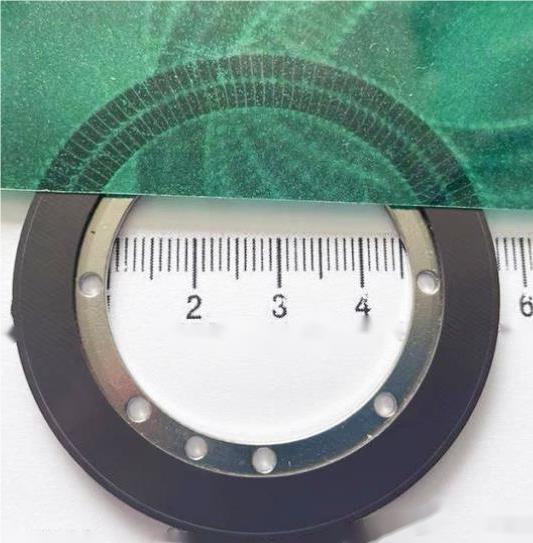
Hydrogenated Nitrile Butadiene Rubber (HNBR) is an advanced material derived from the hydrogenation of Nitrile Butadiene Rubber (NBR). This hydrogenation process reduces the number of unstable carbon double bonds in the NBR polymer, significantly enhancing its mechanical properties, chemical resistance, and thermal stability.

Enhanced Properties of HNBR
1. High-Temperature Oil and Aging Resistance
– Thermal Stability: HNBR exhibits superior thermal stability compared to NBR, Chlorosulfonated Polyethylene (CSM), and Chloroprene Rubber (CR). In tests, while NBR, CSM, and CR are unsuitable for high-temperature environments (150°C), HNBR shows excellent oil and aging resistance.
– Performance in Hydraulic Fluids:** When immersed in hydraulic steering oil at 180°C for 1000 hours, HNBR samples exhibit a lower elongation at break than acrylic rubber. HNBR’s service life, evaluated by elongation changes and crack formation at a given temperature, is 1000 hours at 150°C, significantly higher than NBR and CR.
2. Physical and Mechanical Properties
– Tensile Strength: HNBR vulcanizates can achieve tensile strengths up to 30 MPa, with certain grades (e.g., ZSC) reaching over 50 MPa, surpassing FKM, NBR, and CSM. At 150°C, HNBR’s compression set performance is superior to that of FKM and TFE/P.
– Abrasion Resistance:HNBR demonstrates excellent wear resistance, with tests showing its abrasion resistance being 2-3 times better than NBR and 3-4 times better than FKM in petroleum media at 170°C.
3. Chemical and Ozone Resistance
– Chemical Resistance:HNBR withstands acids, bases, and salts at high temperatures and can operate in highly corrosive lubricating and fuel oils. It performs well in simulated oilfield deep well acidic fluid/gas environments where FKM, TFE/P, and NBR fail.
– Ozone Resistance:Static and dynamic ozone resistance tests show that HNBR does not develop ozone cracks after 1000 hours, indicating excellent ozone aging resistance.
Comparasion NBR vs HNBR
| Property | NBR | HNBR |
| Chemical Composition | Acrylonitrile and butadiene | Hydrogenated acrylonitrile and butadiene |
| Working Temperature Range | -40°C to +120°C | -40°C to +170°C |
| Tensile Strength | 10 to 20 MPa | 20 to 30 MPa |
| Oil&Gas Resistance | good | good |
| Ozone and Weather Resistance | Moderate | Higher ozone resistance and weather resistance than NBR |
| Applications | wheel bearing seal, dust cover, vibration part | HVAC(air conditioning) system,engine,braking, oil&gas industrial( |

We,OBT, have developed cost-effective HNBR materials that provide superior performance. Please contact us to discuss how we can meet your needs and enhance your products.
Reference Reading:
How to measure the hardness: shore A,B,C,D?
How to measure the density of rubber material?
How to Evaluate the Resistance of Rubber to Oils and Other Solvents?
How to Evaluate the Low-Temperature Performance of Rubber?
How to Evaluate the Resistance of Rubber to Oils and Other Solvents?
How to choose between HNBR and AEM?
How to choose between HNBR and FKM(Viton) for O-Ring/gasket?
How choose Between FKM vs FVMQ?
When to use HNBR and Low Temperature HNBR(LT HNBR)?
Low Temperature FKM Rubber: Ideal for Automotive, Aerospace, and Chemical Processing

